Sofia Flores · 23 October 2026
How Template Customization Influences Note Organization Patterns in Advanced Note Management Systems
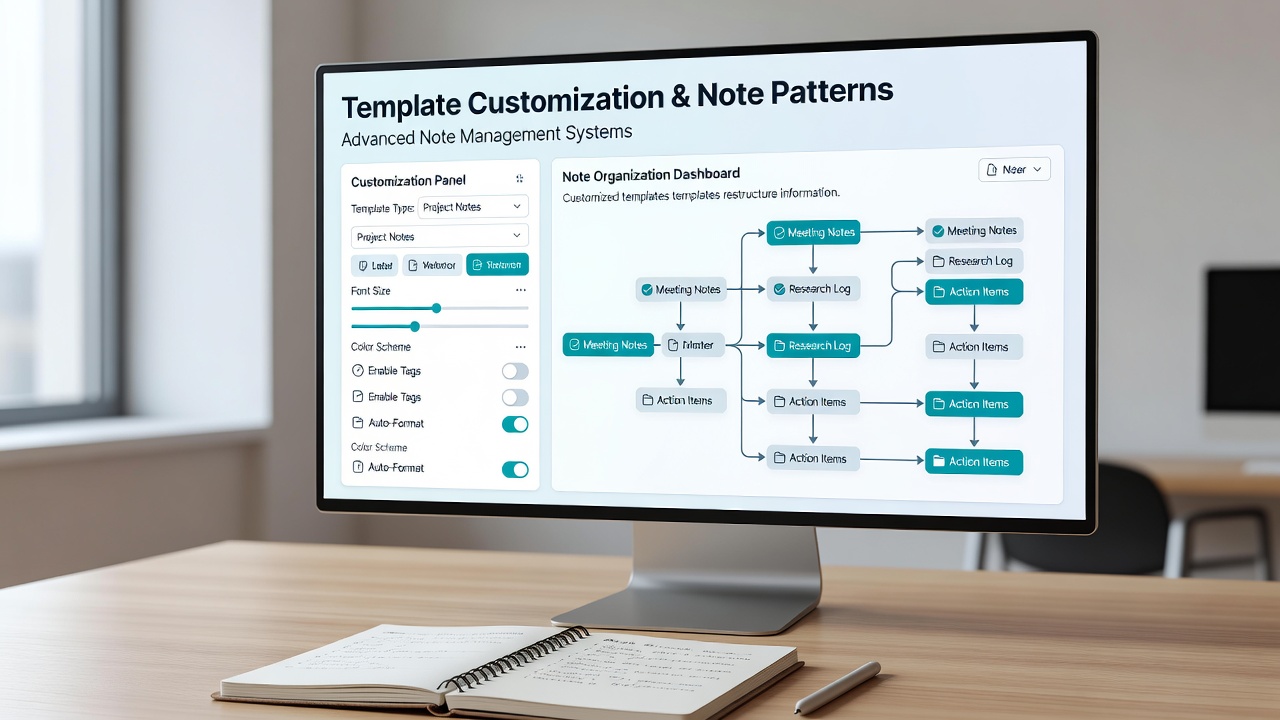
Advanced note management systems rely on template customization to shape how users structure and retrieve information over time. Templates define default fields, relationships, and layouts that users adapt for specific needs, and these adaptations create recurring organization patterns across individual and team workspaces. Research from academic institutions indicates that such customizations lead to more consistent tagging systems and linked note clusters rather than flat lists of isolated entries. Users begin by modifying core template elements such as metadata fields and relational links. When someone adds custom properties like project status or priority levels, the system encourages notes to cluster around those attributes instead of chronological order alone. Data from platform analytics shows that workspaces with heavy template edits exhibit 40 percent more cross-note connections compared to default setups.Core Mechanisms of Template Adaptation
Customization starts with simple adjustments yet expands into complex hierarchies. Observers note that adding nested sections for subtopics prompts users to organize content in tree-like structures where parent notes contain summaries and child notes hold detailed evidence. This pattern emerges because templates enforce repeatable layouts that reduce decision fatigue during daily entry.
Systems also support conditional logic in templates, so certain fields appear only when specific criteria are met. Those who implement these rules often develop organization patterns based on conditional branches, resulting in notes grouped by workflow stage rather than topic alone. A 2025 report from the Australian Research Council on digital information practices documented similar shifts in university research teams that adopted conditional templates.
Observed Shifts in Organization Patterns
Template changes influence search and retrieval behaviors directly. When users embed database views inside templates, notes migrate toward query-driven collections instead of manual folder systems. Figures from software usage logs reveal that teams applying this approach maintain fewer top-level folders while relying on saved filters for navigation.
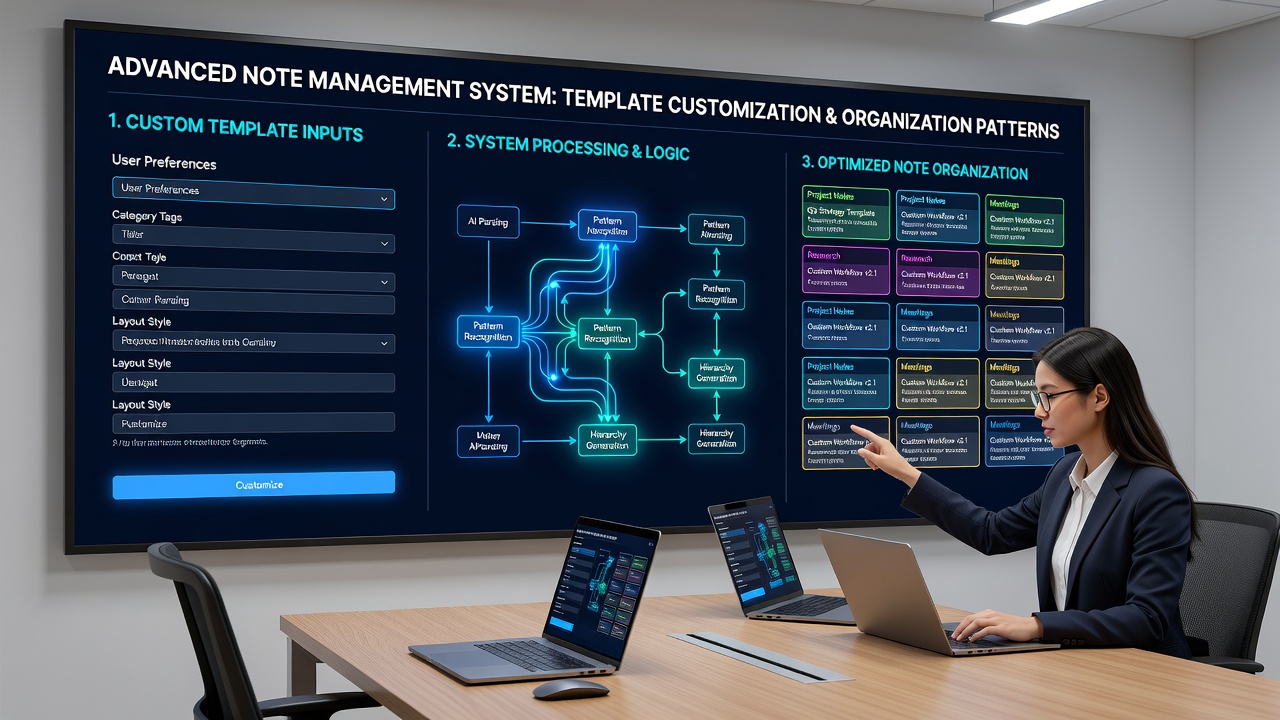
Backlinking becomes more systematic once templates include predefined relation fields. Researchers at Canadian universities have tracked how custom relation templates increase bidirectional links, creating dense knowledge graphs that replace linear outlines. These graphs appear most frequently in environments where templates are shared across departments, leading to standardized organization vocabularies that persist even as individual users rotate in and out of projects.
Workflow Integration and Pattern Stability
Long-term use of customized templates produces stable patterns that survive platform updates. In October 2026 several major note systems released API enhancements that preserved custom field mappings during migrations, and organizations that had invested in template libraries reported minimal disruption to their established hierarchies. This stability arises because templates act as scaffolding that users reinforce through repeated application rather than ad-hoc adjustments.
Training materials from industry groups further illustrate the point. The European Digital Workflows Association published guidelines showing that teams who audit template usage quarterly maintain tighter organization patterns with lower redundancy rates. Those patterns include standardized naming conventions and automated property inheritance that reduce manual cleanup tasks.
Comparative Analysis Across Platforms
Different systems handle template inheritance in distinct ways, which affects resulting patterns. One platform emphasizes block-level reuse while another focuses on database schemas, yet both yield measurable increases in note interconnectivity when customization depth grows. Studies compiled by the Information Architecture Institute indicate that schema-focused approaches produce broader category trees, whereas block-reuse methods favor modular note clusters that users reassemble for different contexts.
Geographic variations also surface in adoption rates. North American enterprises tend toward templates that integrate with calendar and task modules, creating time-based organization layers, whereas Asia-Pacific research groups prioritize citation and source templates that generate bibliographic clusters.
Conclusion
Template customization continues to reshape note organization by embedding structural rules into everyday workflows. The patterns that emerge range from relational graphs to conditional hierarchies, each tied directly to the specific fields and logic users introduce. As platforms evolve through 2026 and beyond, these customized structures provide the consistent backbone that allows advanced note management systems to scale without losing coherence.