Devon Keller · 11 September 2026
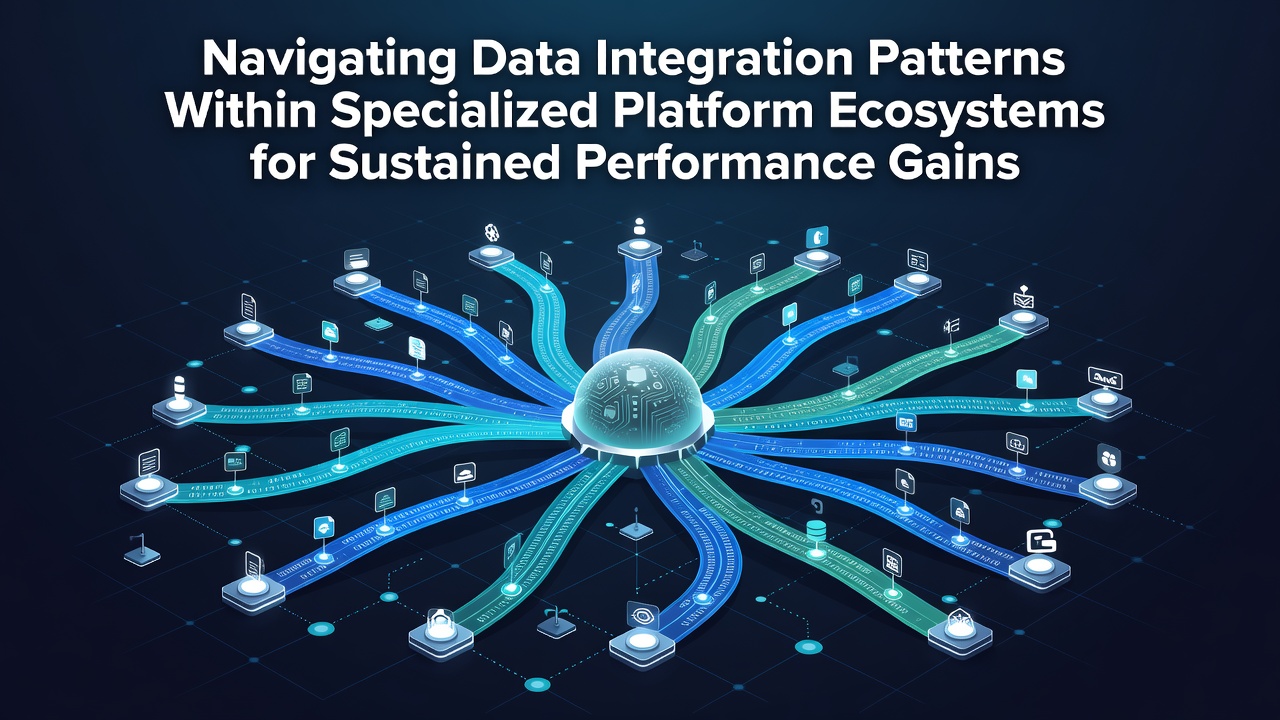
Navigating Data Integration Patterns Within Specialized Platform Ecosystems for Sustained Performance Gains
Specialized platform ecosystems such as enterprise resource planning suites, customer relationship management systems, and cloud-native service layers require structured approaches to data integration that maintain operational efficiency over extended periods. Researchers have documented multiple integration patterns that organizations deploy to connect disparate data sources while preserving system responsiveness, and studies from 2025 onward continue to track how these patterns evolve under increasing data volumes.
Core Integration Patterns in Platform Environments
Point-to-point connections represent one foundational pattern where direct links form between individual applications, yet experts note that this approach often leads to maintenance overhead as the number of platforms grows beyond a handful. Hub-and-spoke models centralize data flows through a single integration layer, allowing observers to monitor transformations at one location while data moves from source systems into analytics repositories or operational databases. Event-driven architectures, by contrast, rely on asynchronous messaging queues that decouple producers and consumers, and research indicates these patterns support higher throughput when platforms handle real-time inventory updates or customer interaction logs.
Data mesh principles have gained traction in recent years because they distribute ownership of data products across domain teams rather than concentrating control in a central IT group. Those who have implemented mesh structures report that domain-specific teams can enforce quality rules closer to the data origin, which reduces latency in reporting cycles across specialized platforms.
Performance Considerations Across Ecosystems
Sustained performance gains depend on how integration layers handle schema evolution, data volume spikes, and cross-platform security requirements. Analysts at the National Institute of Standards and Technology have published guidance on reference architectures that incorporate caching layers and incremental synchronization to limit full data reloads during peak processing windows. These techniques become particularly relevant when organizations operate multiple specialized platforms simultaneously, each with distinct update cadences and data formats.
Monitoring and Optimization Techniques
Continuous monitoring tools track message queue depths, transformation execution times, and end-to-end latency across integration pipelines. Observers note that dashboards aggregating these metrics allow teams to identify bottlenecks before they affect downstream applications, and automated alerting systems trigger remediation workflows when thresholds are exceeded. In September 2026, updated frameworks from international standards bodies are expected to emphasize predictive analytics for capacity planning within these monitoring environments.
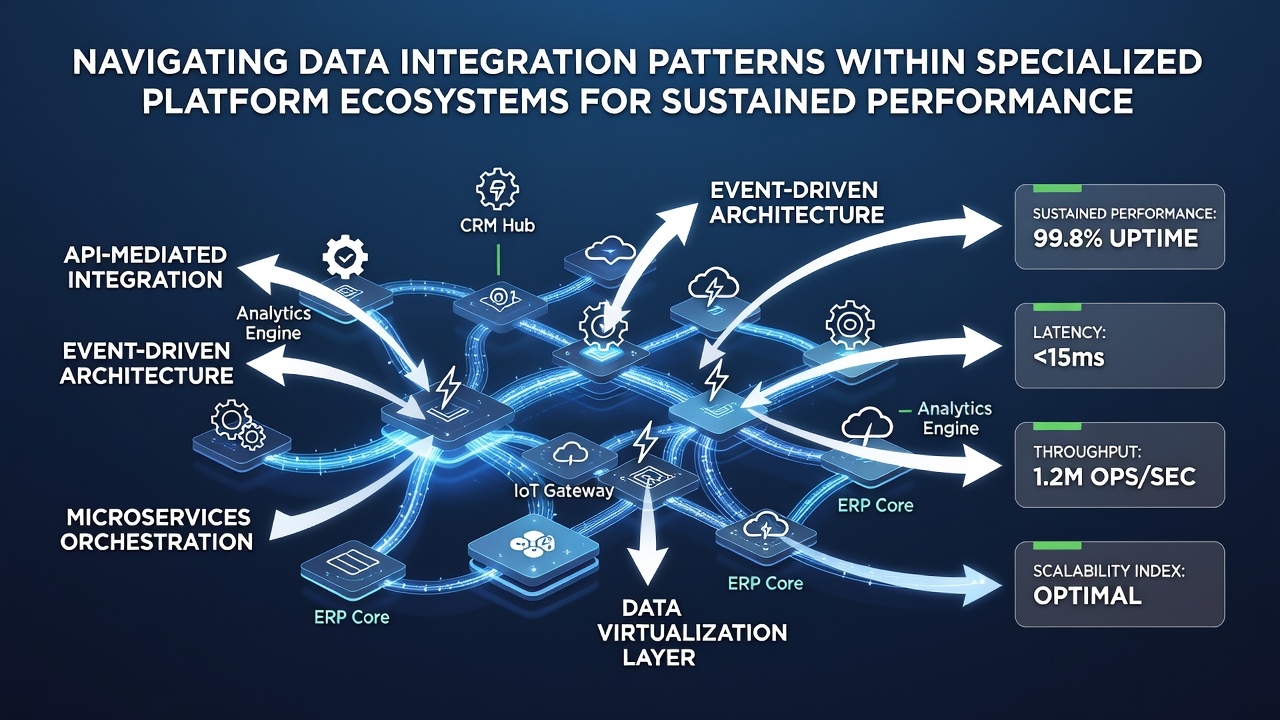
Incremental data loading strategies combined with change data capture mechanisms further support sustained performance because they transmit only modified records instead of entire datasets. European Commission reports on digital infrastructure highlight how organizations that adopt these methods experience measurable reductions in network bandwidth consumption during routine synchronization tasks. Yet implementation requires careful mapping of primary keys and audit trails to prevent data drift between source and target systems.
Adapting Patterns to Platform-Specific Constraints
Each specialized platform ecosystem imposes unique constraints on integration design. Service-oriented platforms often expose REST or SOAP endpoints with rate limits that necessitate throttling logic within the integration layer. Database-centric platforms may favor bulk extract processes scheduled during off-peak hours, while event-sourcing platforms prioritize immutable log streams that demand specialized replay capabilities for recovery scenarios. Those who study these ecosystems find that hybrid pattern combinations frequently deliver the best balance between flexibility and performance.
One study revealed that organizations blending event-driven flows with scheduled batch processes achieved more stable response times during seasonal demand surges. The reality is that no single pattern addresses every requirement, so architects evaluate trade-offs around consistency, availability, and partition tolerance when selecting approaches for particular workloads.
Future Developments and Measurement Frameworks
Emerging standards continue to shape how teams measure long-term performance of integrated systems. Academic research papers from institutions across North America and Asia examine correlation between integration pattern choices and metrics such as mean time to recovery after outages or average query response times in analytical workloads. These investigations provide data points that help practitioners refine their architectures as data volumes and platform counts increase.
Conclusion
Effective navigation of data integration patterns within specialized platform ecosystems rests on matching architectural choices to operational requirements and continuously validating performance against defined benchmarks. Data shows that organizations maintaining structured evaluation processes achieve more consistent results over multi-year horizons, while those who document pattern decisions and their outcomes position themselves to adapt when new platform capabilities or regulatory expectations arise.